
Hand Surgery
Surgical treatment of carpal tunnel syndrome, trigger finger, wrist fractures, tendon injuries and nerve compression syndromes. Tendon and nerve repair with microsurgical methods, treatment of all orthopedic problems of the hand and wrist area.
Overview
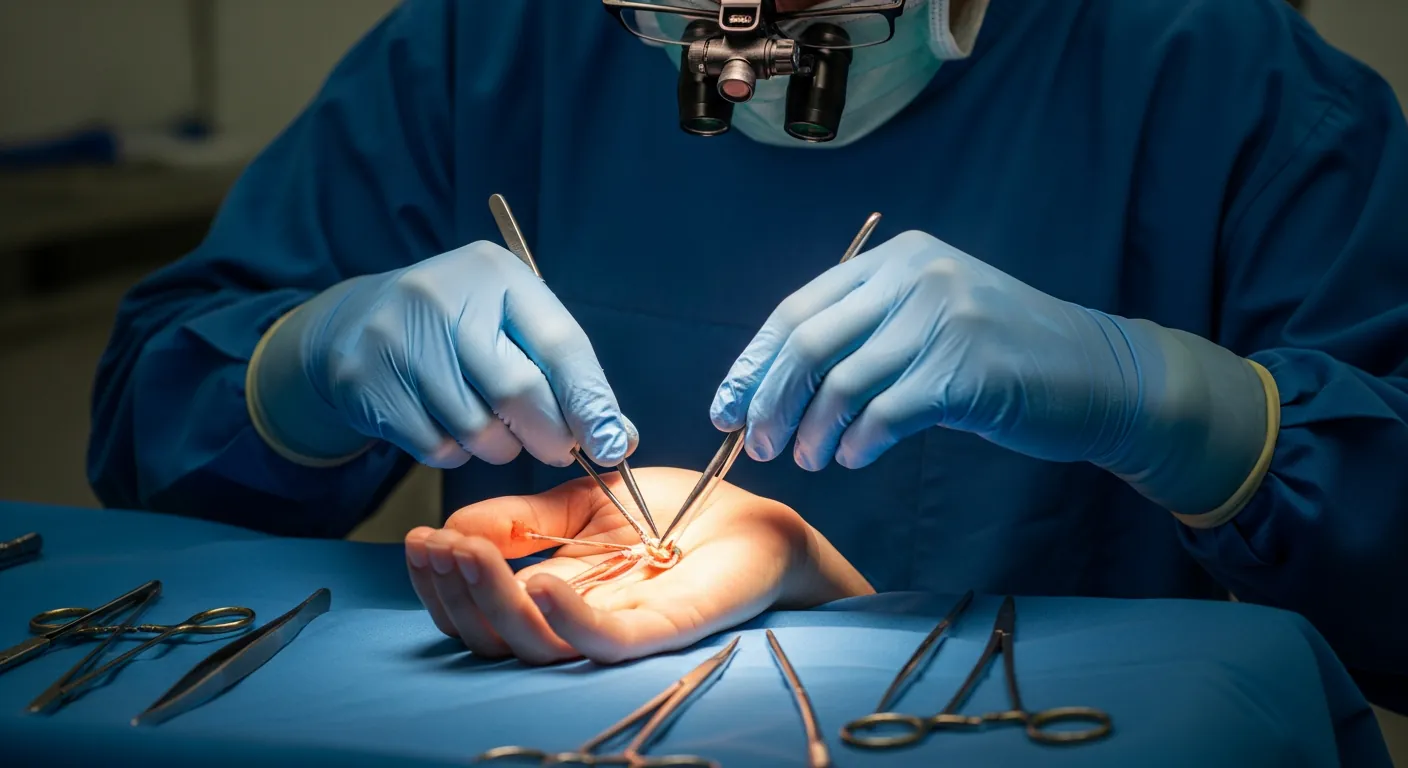
Hand surgery covers the treatment of bone, joint, tendon, nerve, and vascular injuries of the hand, wrist, and forearm. Given the importance of the hand in daily life and work, it requires precise surgical techniques and detailed anatomical knowledge.
Traumatic injuries, nerve compression syndromes, tendon ruptures, and degenerative conditions are the most common topics. The preservation of hand function comes before cosmetic results. The rehabilitation process after surgery is the main element that directly affects the outcome.
Volar locking plate (VLP) application in distal radius fractures has become the gold standard in wrist surgery. Early mobilization is critical for preventing joint stiffness.
Conditions Treated
Carpal Tunnel Syndrome
It occurs as a result of the compression of the median nerve at the wrist. Numbness in the thumb, index, and middle fingers, night pain, and decreased hand dexterity are observed. Complete relief is achieved with a short surgery in advanced cases.
Trigger Finger
It presents with catching and sudden release during bending and straightening the finger. It occurs due to narrowing of the tendon sheath. First-line treatment may be cortisone injection. Surgical release is applied in resistant cases.
Wrist Fractures
Distal radius fractures are among the most common injuries after falls. In displaced fractures, surgical fixation with volar locking plate (VLP) allows early movement and functional gain.
Tendon Injuries
Tendon cuts may occur as a result of cutting tools or glass injuries. Early repair is critical. The techniques and rehabilitation applied in flexor and extensor tendon injuries are different.
De Quervain's Tenosynovitis
It is inflammation of the tendon sheath on the thumb side. There is pain on the outer side of the wrist when moving the thumb. It is common in new mothers. It usually improves with rest, splint, and cortisone.
Cubital Tunnel Syndrome
It is compression of the ulnar nerve on the inner side of the elbow. It causes numbness in the ring and little fingers and weakness in the hand. Nerve release or transposition is required in advanced cases.
Treatment Approaches
Carpal Tunnel Release
It is the release of the carpal ligament that compresses the median nerve through a short incision. It is completed in 15-20 minutes under local anesthesia. The patient goes home the same day.
Volar Locking Plate Application
It provides anatomical reduction and stable fixation in wrist fractures. It prevents joint stiffness by allowing early movement. It is the gold standard in modern practice.
Tendon Repair
It is the suturing of cut tendons with modified techniques. The rehabilitation program is planned according to the tendon type. Early controlled movement prevents adhesions.
Trigger Finger Surgery
Partial release of the A1 pulley allows the tendon to move freely. It is performed under local anesthesia. The patient can start using the hand the same day.
Nerve Decompression
It is applied for the release of compressed nerves. Microsurgical principles are used. Early intervention is important for the complete recovery of nerve function.
Recovery Process
Recovery after hand surgery can be short or long depending on the operation performed. In minor procedures such as carpal tunnel release, the patient can start light work within a few days. Stitches are removed on day 10-14.
Splint use after wrist fracture surgery usually lasts 4-6 weeks. Active movement exercises are performed with a hand therapist from the first week. Rehabilitation after tendon repair is planned much more carefully and can extend to 10-12 weeks. Full functional recovery takes 3-6 months.
Frequently Asked Questions
Is carpal tunnel surgery risky?
Carpal tunnel release is a safe operation performed under short-term local anesthesia. The risk of serious complications is low. Most patients notice that the numbness decreases immediately after surgery.
Does a broken wrist heal in a cast?
Non-displaced fractures can be successfully treated with a cast. However, in displaced fractures, especially in young and active patients, surgical fixation gives better results. The decision is made after X-ray and examination.
Does trigger finger recur?
Recurrence after surgical treatment is rare. New trigger fingers may develop in other fingers of the same hand. The incidence is higher in diabetic patients than in the general population.
How is the cause of hand numbness understood?
The most important clue is which fingers have numbness. Carpal tunnel is considered if in the thumb, index, and middle fingers, and cubital tunnel if in the ring and little fingers. EMG examination provides a definitive diagnosis.
Are stitch marks visible in hand surgeries?
Small and careful incisions are used in modern techniques. Incision lines may be noticeable in the first months but largely fade over time. Scars inside the hand are minimized by placing them in palm lines.
Last updated: April 2026