
Advanced Trauma Surgery
Surgical treatment of bone fractures, dislocations and polytrauma cases. Modern trauma surgery with plate-screw systems, intramedullary nailing and external fixator applications. Original research publications on volar locking plate (VLP) application in wrist fractures, identification and prevention of coronal plane complications.
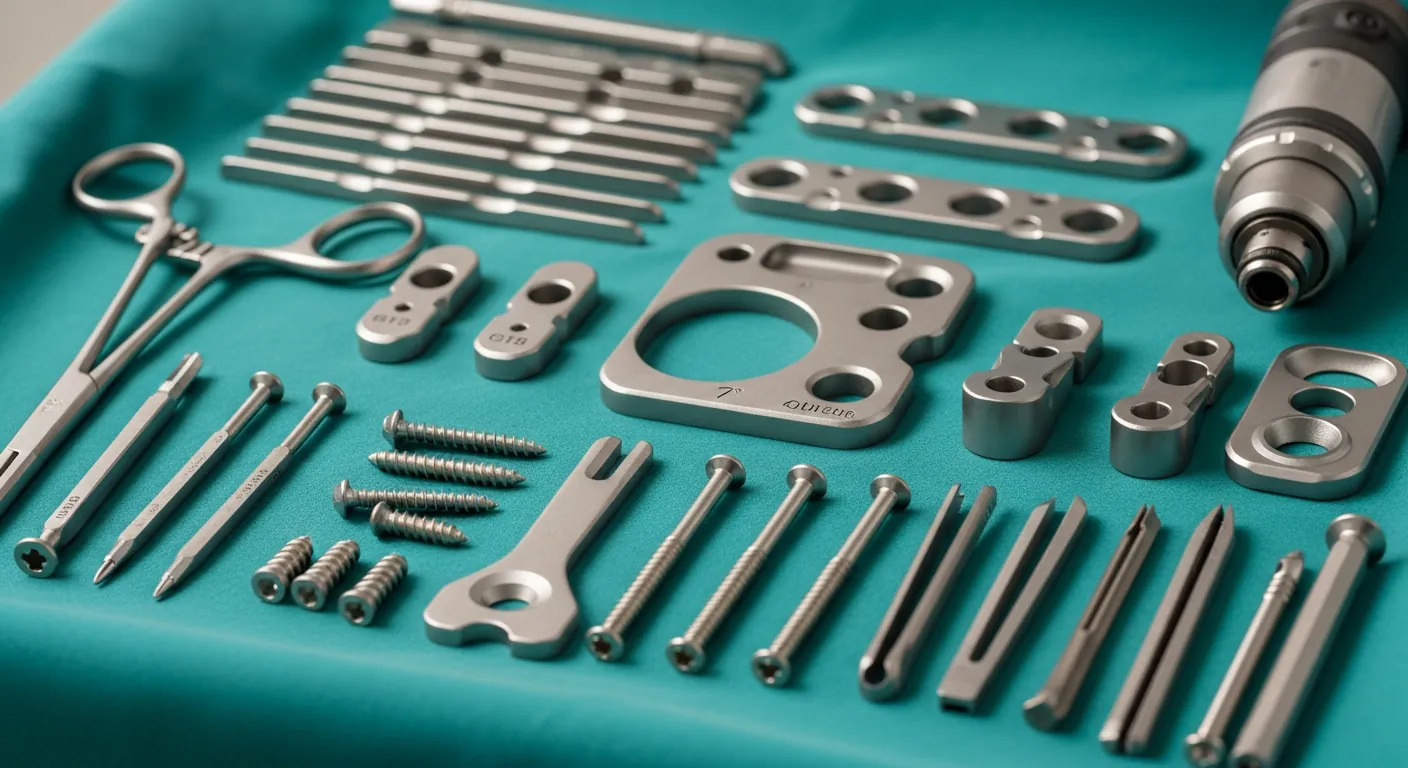
Overview
Trauma surgery covers the surgical treatment of bone fractures, joint dislocations, and soft tissue injuries. Simple or multiple fractures caused by traffic accidents, falls, sports injuries, and work accidents are treated with current plate-screw systems, intramedullary nailing, and external fixator techniques.
Prioritization is critical in polytrauma cases. In multiple fractures, which region to stabilize first depends on the patient's overall condition and soft tissue damage. The goal is to restore both fracture healing and joint function in the early period.
Op. Dr. Emre Kaya has original research publications on volar locking plate (VLP) application in wrist fractures and prevention of coronal plane complications. Anatomical reduction of fractures and early mobilization directly affect long-term outcomes.
Conditions Treated
Wrist Fractures
Distal radius fractures are among the most common fracture types in adults. They present with sudden pain, swelling, and deformity after a fall. Volar locking plate application is the gold standard in treatment.
Hip Fractures
Seen especially in individuals over 65 after falls. Rapid surgical intervention and early mobilization reduce the risk of complications. Prosthesis or osteosynthesis is preferred depending on the fracture location.
Lower Extremity Fractures
Femur, tibia, and fibula fractures occur in high-energy injuries. Anatomical reduction is achieved with intramedullary nailing or plate osteosynthesis. Staged surgery may be planned depending on the soft tissue condition.
Shoulder and Clavicle Fractures
Displaced clavicle fractures and proximal humerus fractures may require surgical treatment. Early surgery helps preserve shoulder range of motion.
Polytrauma Cases
In injuries affecting multiple regions, bone stabilization is performed after eliminating the vital risk. Temporary stabilization with external fixator followed by definitive surgery may be applied.
Intra-articular Fractures
Anatomical reduction is vital in fractures affecting the joint surface. Even millimetric displacement can lead to osteoarthritis in the long term. Therefore, surgical technique and implant selection are critical.
Treatment Approaches
Plate and Screw Osteosynthesis
Locking plate systems hold fracture fragments in anatomical position and allow early mobilization. They provide safe fixation especially in intra-articular fractures and osteoporotic bone.
Intramedullary Nailing
In long bone fractures, stabilization is achieved with a titanium nail placed in the bone's inner cavity. It offers the advantages of less soft tissue damage and faster recovery.
External Fixator
Used for temporary or permanent stabilization in severe soft tissue damage or open fractures. Allows wound care and tissue healing.
Minimally Invasive Techniques
Surgery performed through small incisions in suitable fractures reduces blood loss and shortens recovery time. Cosmetic results are also better.
Recovery Process
Recovery after trauma surgery varies depending on the fracture type, location, and surgical technique applied. Generally, the first 6 weeks cover the basic steps of bone healing. During this period, pain management, swelling control, and protection of the affected area are essential.
Physical therapy begins in the first weeks after surgery. Early movement prevents joint stiffness and helps preserve muscle mass. From the 3rd month, most patients can return to their daily activities. Complete bone healing can take 3 to 6 months. The process is monitored with follow-up X-rays.
Frequently Asked Questions
When can I start walking after fracture surgery?
This depends on the fracture location and the fixation method applied. Walking is immediately possible in upper extremity fractures. In lower extremity fractures, partial weight bearing with crutches or a walker usually begins in the first days. Full weight bearing time varies according to surgical details.
Is surgery always necessary for fractures?
No. Non-displaced or slightly shifted fractures can be treated with cast or splint. However, intra-articular fractures, significantly displaced fractures, and open fractures require surgical treatment. The decision is made after X-ray and, if necessary, CT examination.
How long does pain last after a fracture?
Acute pain usually subsides within the first 1-2 weeks. Pain largely disappears with the completion of bone healing. In some patients, mild discomfort during weather changes may continue for a long time.
Will the plates and screws be removed?
In most cases, implants can remain permanently. However, they can be removed after 1-2 years in cases of skin discomfort, infection, or as desired in young patients. This decision is made individually for each patient.
When can I return to work after surgery?
For desk jobs, 2-4 weeks may be needed, while physical work lines may require 8-12 weeks or longer. The fracture location and job requirements are evaluated together. An individual plan is made for each patient.
Last updated: April 2026
Clinical Cases
Volar Locking Plate (VLP) Surgery for Distal Radius Fracture
Surgical treatment of wrist fractures with volar locking plate. Original research on classification, clinical outcomes and prevention methods of plate protrusion in the coronal plane (J Orthopaedic Science, 2025).
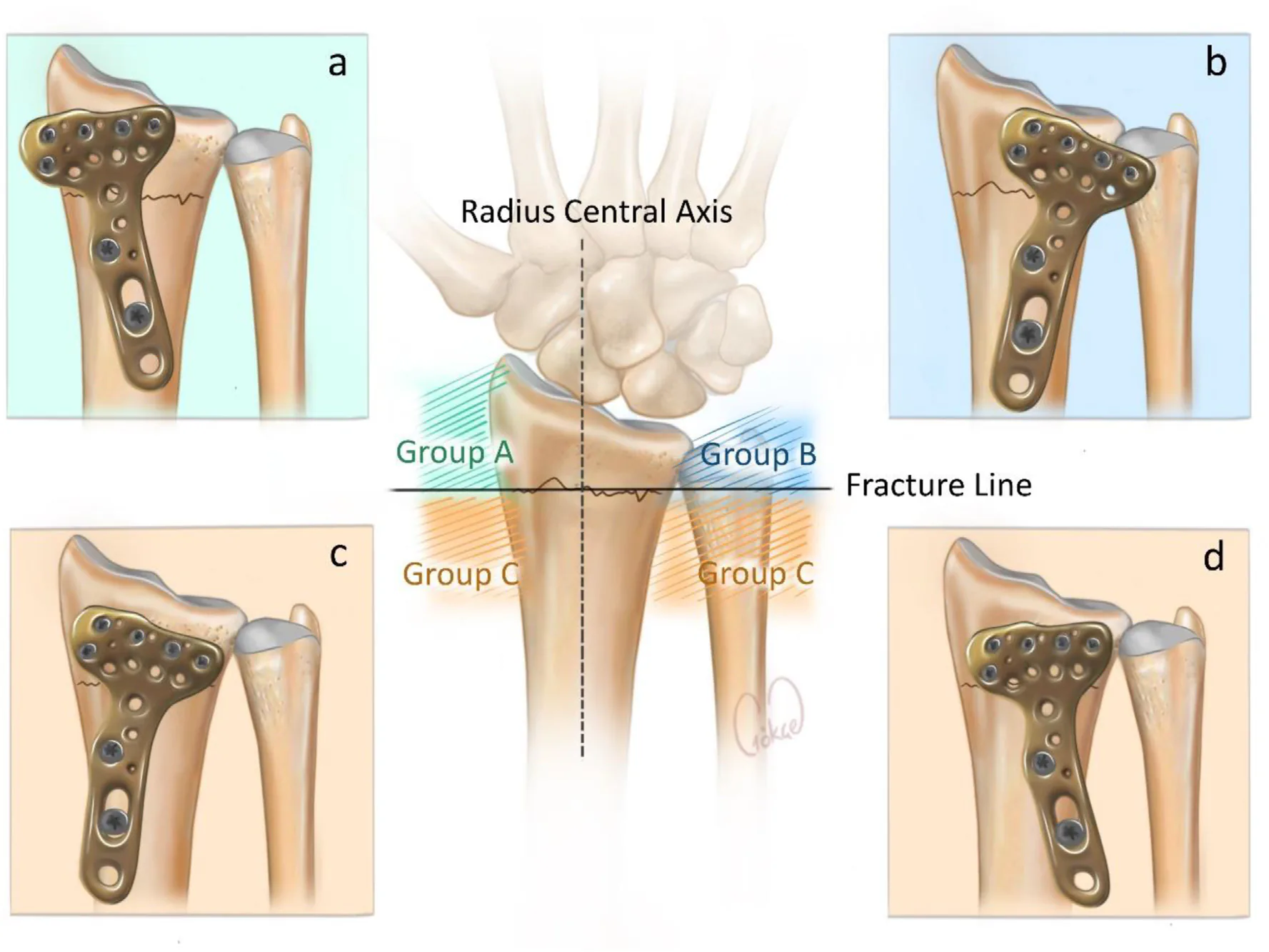
VLP coronal plane protrusion classification — Group A, B, C, D
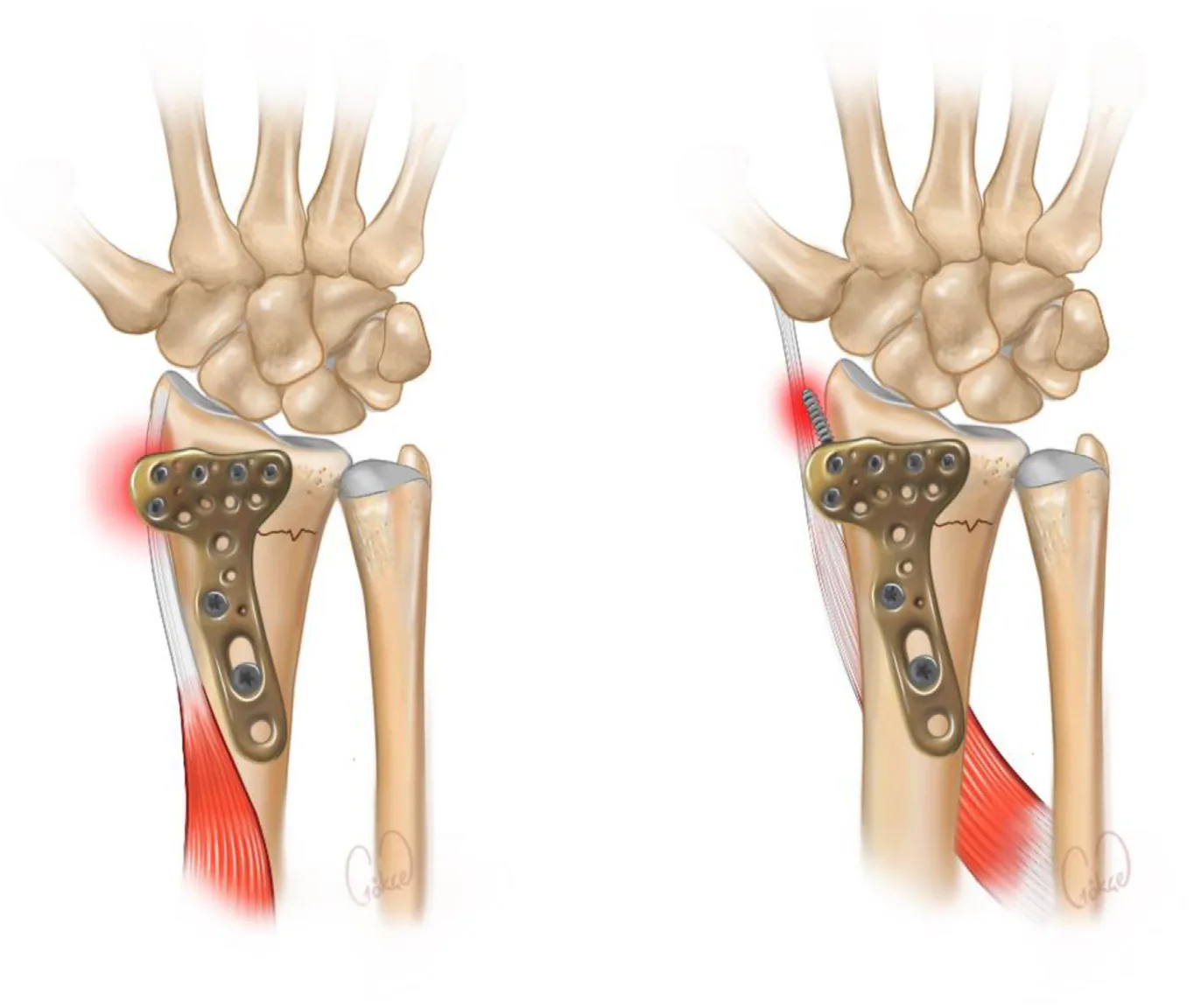
Tendon irritation in plate protrusion — Brachioradialis and APL tendinitis
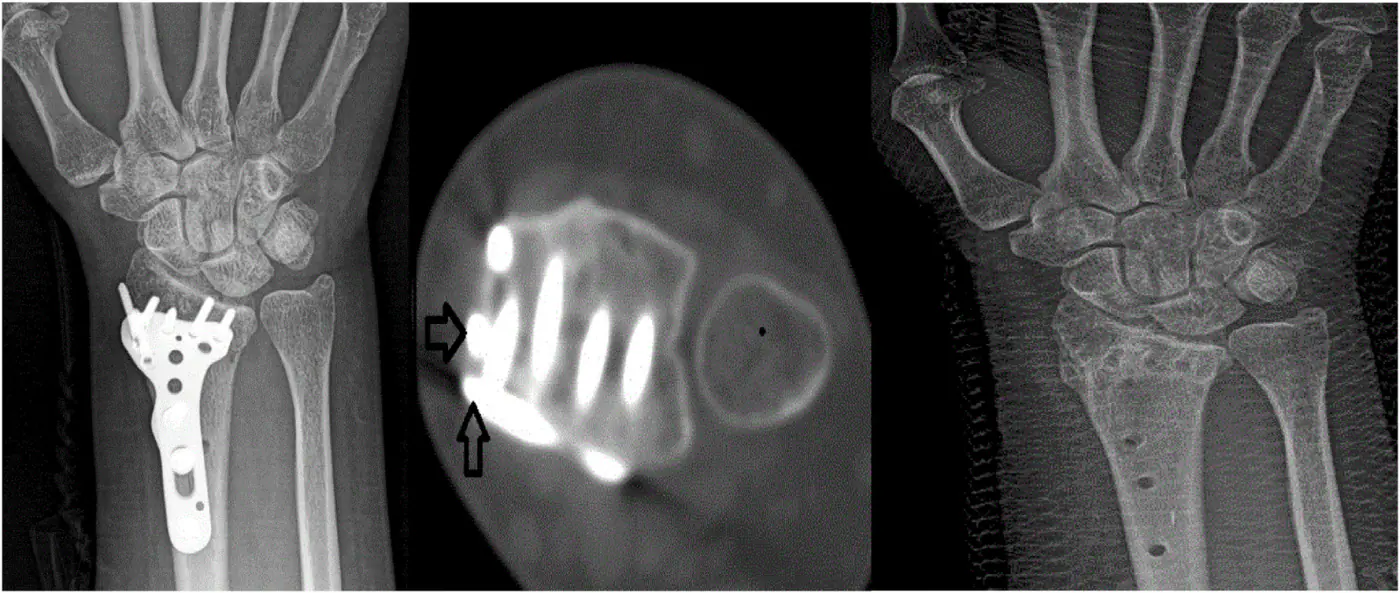
Plate protrusion X-ray and CT images